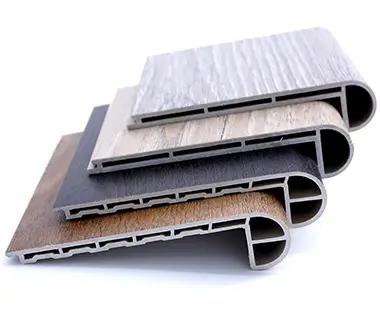
Why Do SPC Flooring and Stair Treads Have Color Variations?
 Are Foam PVC Rolls Suitable for Home Use?
 Why SPC+IXPE Outperforms SPC+EVA, LVT & Bare SPC?
 How Is SPC Flooring Packed for International Shipping?
PVC flooring can be divided into three categories: dense flooring, foaming flooring, and homogeneous flooring. Some customers may not understand this classification. This article will briefly describe the differences between the three.
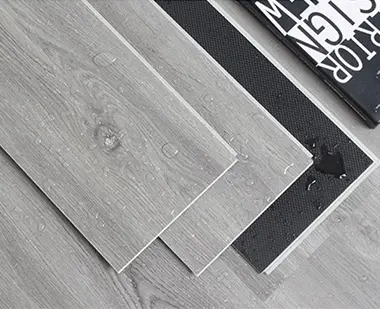
What is a dense bottom PVC floor? A dense bottom PVC floor is a multi-layer composite plastic floor with a non-foaming base as the bottom. The wear resistance of this floor is higher than that of the PVC floor with a foamed bottom. It has good moisture resistance and high temperature resistance.
If it is for home use, you don’t need to choose a dense bottom. The foam bottom is enough to meet the wear-resistant requirements in the family. Of course, you can also choose a PVC floor with a dense bottom for home decoration.
The thick foamed PVC floor has a high cushioning effect, and is mostly used in sports occasions, such as dance rooms, which can help dancers to cushion their toes, ankles, knees, waist and other parts when they are dancing.
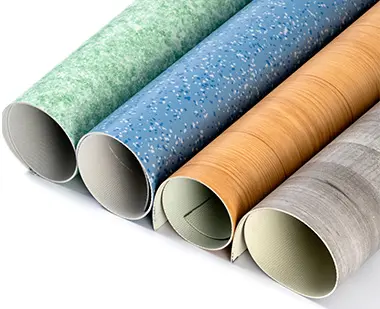
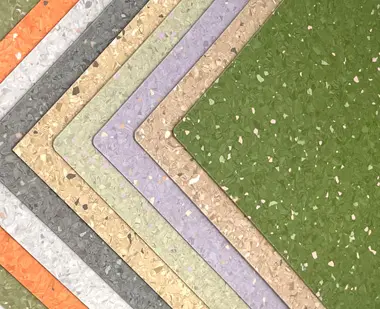
There is also a kind of homogeneous and transparent PVC floor, which is divided into directional and non-directional. The common point of non-directional homogeneous and directional homogeneous and transparent is the pattern from the surface to the back. They are all the same, and they are made of wear-resistant materials from the surface to the bottom, and they are not layered when viewed from the side. However, due to the different content of PVC, the wear resistance of the directional homogeneous transparent core is slightly worse than that of the non-directional homogeneous transparent core. No need.
To sum up: Because of the high pressure resistance of the dense bottom, it is generally suitable for office occasions, and the super wear-resistant performance of the same transparency is mostly used in high-traffic occasions. The thick foam and high cushioning are mostly suitable for sports occasions.
HAODIBAN brand is a flooring manufacturer engaged in PVC flooring, LVT flooring, SPC flooring, WPC flooring and other products.