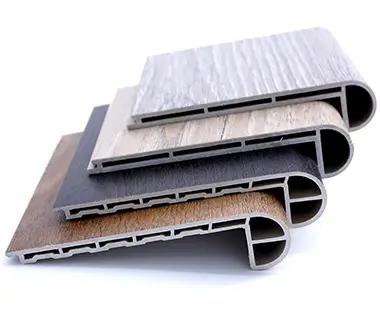
Why Do SPC Flooring and Stair Treads Have Color Variations?
 Are Foam PVC Rolls Suitable for Home Use?
 Why SPC+IXPE Outperforms SPC+EVA, LVT & Bare SPC?
 How Is SPC Flooring Packed for International Shipping?
There are many types of self-leveling, and recently received a confusion from customers. Why is there a drum when building cement self-leveling? We have summarized several reasons for reference.
Whether it is paving PVC plastic flooring or installing sports wood flooring, there may be situations where the ground is uneven and cannot be paved. Cement self-leveling has become one of the main methods for repairing the ground. Cement self-leveling is It is composed of cement, binder and various active ingredients. Compared with the traditional cement floor, it has the characteristics of good fluidity, reasonable construction and self-leveling time, and fast drying. But at the same time, there will be hollowing and cracking problems due to various reasons. So what is the main reason for the self-leveling drum cracking?
There are many reasons for the cracking and swelling of the cement self-leveling surface, mainly including the base layer, materials, construction, maintenance and other issues. The problems of the base are mainly reflected in the serious sanding on the ground, the low strength of the base, and the cracking of the base. In such a situation, it is necessary to repair the seam first, that is, cut and groove the irregular crack, clean up the waste slurry in the cutting seam, and then use a repair agent to repair it, and then scrape off the excess material with a scraper, and press the surface The purpose of repair can be achieved.
Self-leveling mainly uses the principle of slow setting. After adding water to the self-leveling, it is poured into the ground and penetrates into the base. The surface is cracked. Therefore, during the construction process of self-leveling, a large amount of water can be soaked in the self-leveling base to replenish the water lost due to self-leveling reaction, and the purpose of reducing cracking can be achieved.
Uncleaning of the base layer and improper use of interface agents may cause the self-leveling surface to lose water too quickly, resulting in shrinkage cracks. Therefore, when selecting materials, we must be strict and cautious. Only strictly selected materials are more reliable in quality. Spectrum, but also can more effectively reduce the hollowing and cracking of the self-leveling ground.
The self-leveling construction should also be rigorous. The thicker the self-leveling thickness, the greater the pressure, and the risk of drum cracking will also increase. If the thickness of the self-leveling cement exceeds 5.0mm, it is easy to crack and bulge, which is caused by the shrinkage and expansion of the self-leveling. During construction, it is appropriate to keep the thickness of the self-leveling construction within 5.0mm.
Before construction, check the dryness and cracking of the ground to ensure the flatness, humidity and hardness of the ground. The base must be fully watered and moistened, and the cement slurry bonding layer should not be painted on the ground leveling base too early, otherwise In the follow-up operation, the brushed cement slurry is easy to dry and harden, not only has no cohesive force, but also acts as an isolation layer, which causes sand on the ground and easily causes self-leveling and bulging.
In order to maximize the self-leveling ability of cement, and to avoid problems such as drumming and cracking in the later stage, it is necessary to do a good job of self-leveling before flooring.
As a Chinese flooring factory, HAODIBAN mainly produces PVC coiled flooring, SPC flooring, LVT flooring and other flooring products. It is committed to providing high-quality products to global customers and achieving win-win cooperation with global customers.