Are Foam PVC Rolls Suitable for Home Use?
 Why SPC+IXPE Outperforms SPC+EVA, LVT & Bare SPC?
 How Is SPC Flooring Packed for International Shipping?
 Inspected Vinyl Floor Delivery to Kuwait | HAODIBAN
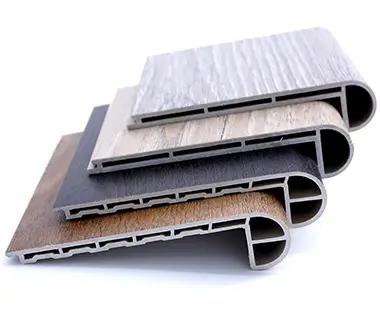
As a professional flooring manufacturer, we explain five key factors that cause color changes in SPC flooring accessories.
1. Differences in wear layer thickness:
Generally, SPC flooring has a thicker wear layer (0.5 mm). Stair treads have a thinner wear layer (about 0.1 mm). This difference in thickness alters the refractive index of light, resulting in a visual difference in shade.
2. Presence or absence of a surface UV coating:
High-quality SPC flooring often has several UV coating layers to improve stain and wear resistance. Stair treads and other accessories may not have the same UV coating grade or full coverage. This can cause differences in reflectivity and gloss.
3. Differences in Surface Embossing Processes:
There are differences in the textures of the steel molds used during the embossing process for flooring and accessories. Changes in embossing depth and detail affect how light scatters on the surface. This can cause visible color differences.
4. Production Processes and Temperature Differences:
The production lines, machinery, and hot-pressing temperatures for the two products differ. Under different machine temperatures and process settings, pigment pyrolysis or color development can cause small physical changes.
5. Impact of Color Film Gradients and Cutting Locations:
High-end SPC flooring often features large-format or gradient color film designs. Since stair treads are fairly narrow, cutting the color film creates pieces from different parts of the pattern. This can cause noticeable color differences after assembly.
Furthermore, whether for flooring or stair treads, the perceived color may vary slightly under different lighting conditions.
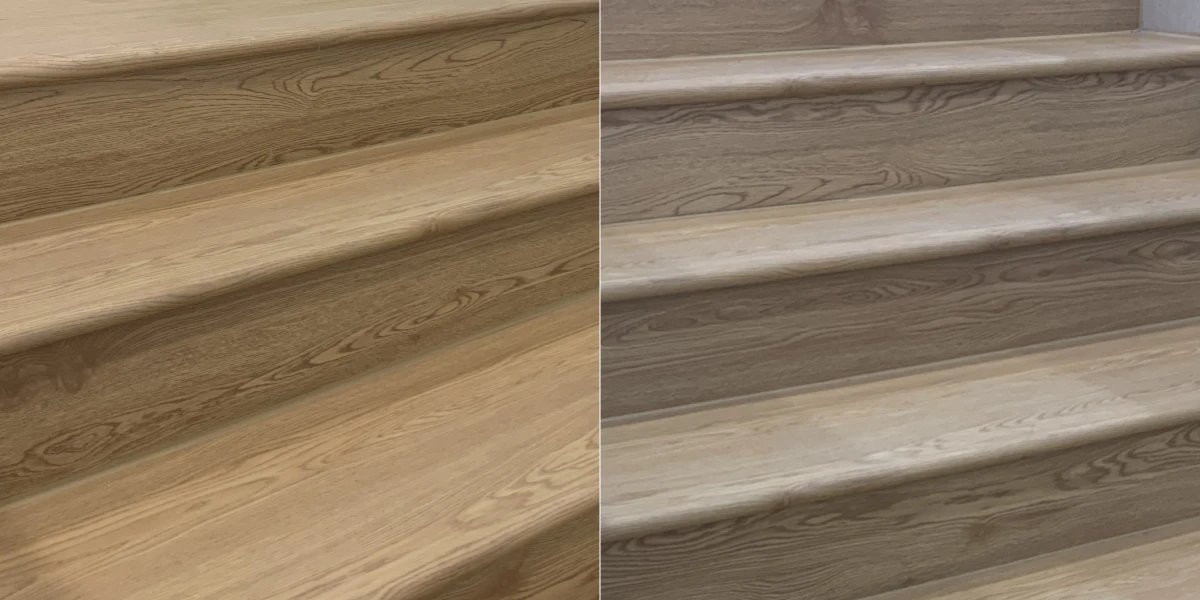
In summary, there may be some color variation between SPC flooring and stair treads. This is mainly due to manufacturing processes, physical structure, and material properties. This is normal in the building materials industry.
Are you currently experiencing color discrepancies with accessories or other coordination issues while installing SPC flooring?