Why Do SPC Flooring and Stair Treads Have Color Variations?
 Are Foam PVC Rolls Suitable for Home Use?
 Why SPC+IXPE Outperforms SPC+EVA, LVT & Bare SPC?
 How Is SPC Flooring Packed for International Shipping?
More and more buyers are choosing LVT flooring. This choice applies to home decoration, engineering projects, and private spaces. In fact, can LVT flooring be considered both safe and durable?
As a starting point, it is important to establish a clear definition of LVT flooring.
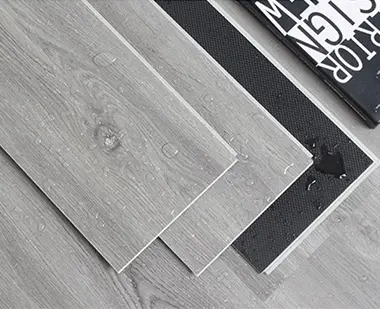
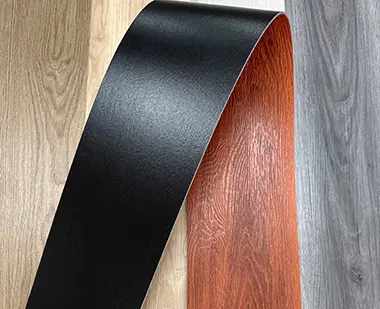
The main raw materials of this floor are: polyvinyl chloride + stone powder. High-temperature bonding produces its main structural UV layer, wear-resistant layer, printing layer, and substrate. The common patterns on the market are: wood grain, stone grain & carpet grain.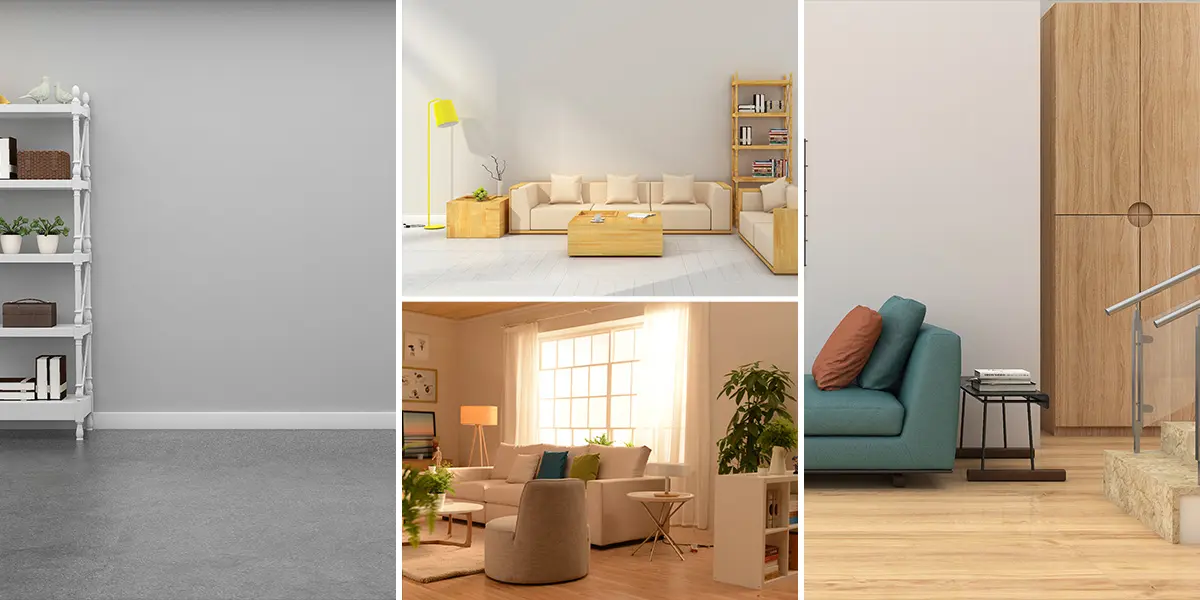
Secondly, is LVT flooring merely a marketing gimmick, or does it genuinely offer high quality?
As a supplier of quality flooring, we believe that LVT flooring that passes inspection works well.
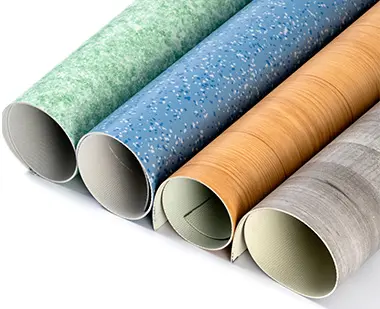
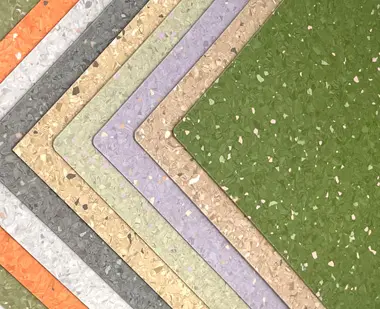
LVT flooring has realistic texture presentation including: wood grain, stone grain & carpet grain. LVT flooring is light and thin, and has unique advantages in the process of high-rise building renovation. LVT flooring can be installed in different ways.
You can choose from Click Lock, Dry Back, Self-adhesive, or Loose Lay methods. In addition, LVT flooring also has the advantages of environmental protection, fire retardant, easy maintenance, etc.
Next, the myth of LVT flooring: the truth about safety and durability
There may be some confusion among consumers when purchasing LVT flooring. One frequently raised question is whether it offers a high level of safety.How is its safety demonstrated? Is its durability as exceptional as claimed?
LVT flooring is thinner than materials like ceramic tiles. It is normal to worry about how easily it can be damaged. To what extent does its reduced thickness contribute to potential vulnerability to wear or structural damage?
The safety of LVT flooring
As mentioned in the previous article, the main raw materials of LVT flooring are polyvinyl chloride + stone powder. LVT flooring belongs to the category of PVC and plastic flooring materials. However, this does not mean it is unsafe or unreliable.
No heavy metals, benzene and other harmful substances are added during the production and manufacturing of LVT flooring. In addition, LVT flooring also has certain anti-slip, fire retardant and other properties. Therefore, there is no need to worry too much about the safety of LVT flooring that has passed quality inspection.
Warm Tips: Choose a third-party environmental certification. The LVT floor you buy should come from a certified brand or manufacturer. This ensures the materials are safe, non-toxic, and environmentally friendly.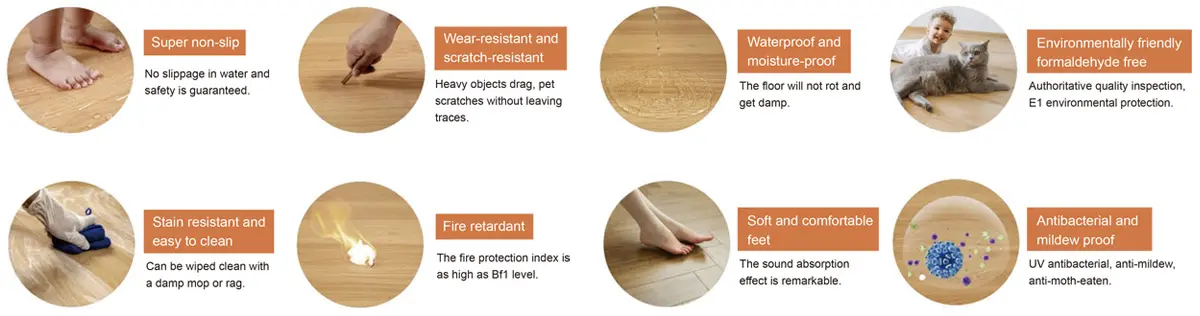
Durability of LVT Floor
We do not deny that LVT floor is light and thin compared to other floors, but this does not mean that LVT floor is not durable. The LVT floor has a strong, wear-resistant layer on its surface. This layer comes in different thickness options.
LVT floor with added high-quality wear-resistant layer is suitable for commercial spaces with large traffic. For example: offices, supermarkets, schools, etc. Its service life can far exceed some low-end wooden floors or carpets.
Warm Tips: When buying LVT flooring, pay attention to the thickness of the wear-resistant layer. When choosing flooring, one should look beyond the price and also take into account factors such as quality and performance. You should also think about the product's specifications and quality.
Almost every floor on the market has advantages and disadvantages, and LVT floor is no exception. But it is indeed a floor material choice that takes into account beauty, practicality and cost-effectiveness. For more information on LVT floor and floor solutions, please contact us.