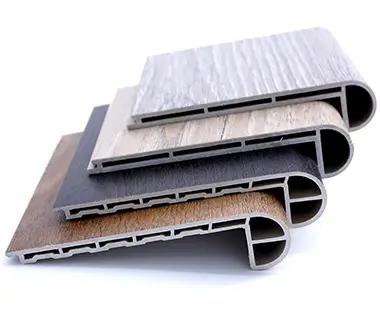
Why Do SPC Flooring and Stair Treads Have Color Variations?
 Are Foam PVC Rolls Suitable for Home Use?
 Why SPC+IXPE Outperforms SPC+EVA, LVT & Bare SPC?
 How Is SPC Flooring Packed for International Shipping?
Are you wondering which flooring to use for your renovation? Are you wondering which flooring is more cost-effective? This article will introduce you to the 10 more common types of flooring.
Whether as a designer, a project leader, or an owner? Have you ever considered what kind of flooring I should choose when decorating?
Floor material? Floor type? Price point? Easy to maintain? Easy to clean? Good value for money? …are these ever factors you consider when designing a floor?
Choosing the right flooring is essential! This will affect the overall decoration style of the area's appearance. This will design the overall experience in day-to-day use.
Next, HAODIBAN will introduce the ten common floor types one by one.
Laminate flooring has four layers: wear-resistant, decorative, high-density base material, and balance (moisture-proof) layer. People also refer to laminated flooring as impregnated paper laminated wooden flooring and laminate flooring. Qualified laminate flooring is one or more layers specially impregnated with thermosetting amino resin.
▶ Pros: This product offers benefits such as its ability to resist stains and its ease of cleaning. It is also stable and does not easily deform or crack. Additionally, it comes in a variety of designs and colors, giving it a nice appearance. Plus, this flooring is quick and easy to install.
To a certain extent, it's worth the money.
▶ Cons: uncomfortable; lacks visual appeal; hard to fix if water damaged; releases formaldehyde.
▶ Application: Floor decoration of conference rooms, offices, hotels, restaurants and residential buildings, etc.
2. Solid wood flooring
Generally, we can divide solid wood flooring into two types: cork flooring and hardwood flooring. There will be certain differences in the wood chosen between the two. Wooden floors of different materials have different densities and hardnesses, so their stability is also different.
▶ Advantages: natural beauty, comfortable foot feel, etc.
▶ Disadvantages: high price, easy to deform, susceptible to moisture, requires regular maintenance, higher maintenance costs, etc.
▶ Application: hotels, home decoration, office buildings, etc.
3. Floor paint
Types of floor paint include epoxy, polyurethane, anti-corrosion, elastic, anti-static, and anti-slip.
Take epoxy floor paint as an example
▶ Pros:
▶ Cons:
▶ Application: factories, parking lots, etc.
4. Carpet
Carpet is a type of floor covering made from natural or synthetic fibers like cotton, wool, or silk. You can make it by hand or machine using knitting or weaving techniques. Generally, we can divide carpets into two types: wall-to-wall carpets and area carpets.
▶ Advantages: high appearance, high comfort, good thermal insulation effect, good safety, etc.
▶ Disadvantages: difficult to clean, limited service life, higher price, not suitable for all occasions, etc.
▶ Application: office buildings, hotels, home decoration, etc.
5. Ceramic tile floor
Ceramic tile is a strong and durable material made from special metals and minerals. It resists acids and alkalis and people create it through a series of steps including grinding, mixing, pressing, glazing, and heating.
It is a building or decorative material. It's ceramic tile. The raw materials, such as clay, quartz sand, and others, are mixed and compressed at high temperatures to achieve high hardness.
▶ Pros: easy to care for, moisture-proof, wear-resistant, etc.
▶ Cons: cold feet, easy to slip, may require caulking or caulking after paving, etc.
▶ Applications: hotels, home decoration, office buildings, retail stores, kitchens and bathrooms, etc.
6. SPC floor
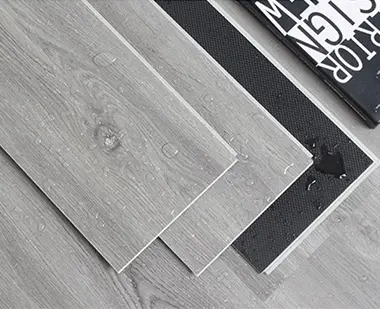
SPC flooring consists of calcium carbonate + PVC plastic, which undergo multiple processes. SPC flooring is a kind of rigid sheet flooring.
▶ Advantages: waterproof and moisture-proof, anti-slip, super wear-resistant, fire-proof and flame-retardant, simple paving, etc.
▶ Disadvantages: Because the installation method is a lock, the thinnest thickness is generally 4MM.
▶ Application: Office buildings, retail stores, home decoration, hotels, etc.

7. LVT floor
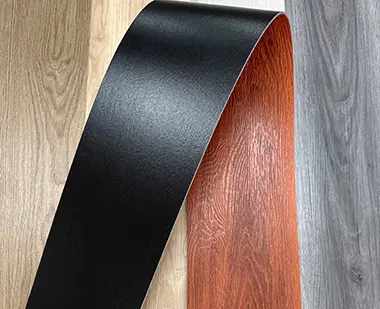
LVT flooring consists of calcium carbonate + PVC plastic, which undergo multiple processes. LVT flooring is a semi-rigid sheet flooring.
▶ Benefits: water-resistant, non-slip, germ-free, durable, fire-resistant, easy to install and maintain.
▶ Disadvantages: The overall thickness of the floor is thin and soft.
▶ Application: hotels, home decoration, apartments, offices, etc.
8. Bamboo flooring
Bamboo flooring consists of bamboo as its main material, which undergoes special harmless treatment at high temperature and high pressure. The flooring can take on the natural texture of bamboo.
▶ Pros: beautiful appearance, warm in winter and cool in summer, etc.
▶ Cons: easily affected by air humidity and may contain formaldehyde, etc.
▶ Application: hotels, home decoration, office buildings, theme restaurants, etc.
9. PVC roll material
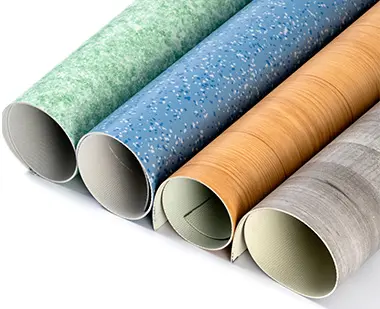
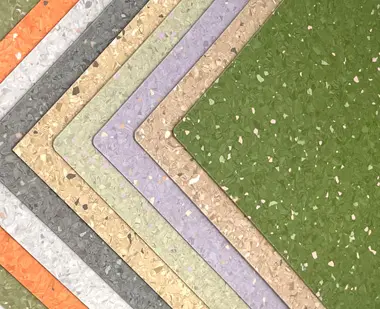
Coiled flooring is a roll of flooring with a relatively soft texture. Depending on the type of flooring, the regular dimensions of the flooring are also different. There are three common types of coiled flooring: PVC dense coiled flooring, PVC foamed coiled flooring, and PVC homogeneous coiled flooring.
▶ Advantages: eco-friendly, durable, lightweight, fire and water resistant, easy to install and maintain, comfortable, seamless, available in different colors.
▶ Disadvantages: Installation in smaller locations may require repeated cutting.
▶ Application: kindergartens, hospitals, schools, etc.
10. Natural stone
Natural stone is a term for materials mined from rocks and made into blocks or plates. There are two main types of natural stone used for architectural decoration: granite and marble.
▶ Pros: high hardness, unique pattern, certain visual value, etc.
▶ Cons: Lack of elasticity, limited ability to resist chemical products and stains, etc.
▶ Application: hotels, offices, home decoration, etc.
The above is an introduction to the ten common types of flooring during decoration. It is undeniable that floors have advantages and disadvantages. HAODIBAN recommends that you fully consider all factors when choosing flooring. I hope this article can give you some inspiration when weighing the pros and cons of flooring.